State of Practice

Adoption Competency: State of Practice

Families across the adoption, foster, and kinship network have long voiced what new data confirms: when mental health professionals understand the lived realities of adoption, outcomes improve—and families thrive.

Report_State of Practice
C.A.S.E. Logo

“This is more than a study—it’s a call to action. After more than 25 years of pioneering this critical body of work, we now have the data to prove what adoptees, families, and clinicians have been telling us: when mental health care reflects the lived realities of adoption, it changes lives. The nation cannot afford to overlook this as a subspecialty any longer.”

Debbie Riley
Debbie Riley, LCMFT C.A.S.E. CEO

National Survey Highlights 

This is a report of key summary findings from a survey sponsored by the Center for
Adoption Support and Education (C.A.S.E.) and conducted by PolicyWorks, Ltd. that sought to gain an understanding of the current views and experiences of members of adoption kinship networks related to seeking and engaging mental health services.

The survey, completed in spring/summer 2025 by 500 participants across 44 U.S. states, one U.S. territory, and 14 locations outside the U.S., engaged adoptive parents, adoptees, birth parents, adoptive siblings, birth siblings, and others. (Because many reported multiple roles the percentages exceed 100 percent.)

86.2%
of respondents have engaged with mental health services
3X
higher rate of engagement in mental health services than the general U.S. population
21.84%
rated their clinicians as adoption competent with adoptees facing the steepest access challenges

Some respondents with negative therapeutic experiences said…

Adoptee
“Many just avoided asking more questions about it or didn’t think of adoption as trauma.”
Birth Parent
“...Immediately started our work together by referencing adoption narrative talk...”
Adoptive Parent
“Not understanding the complexities of adoption or foster care and focusing on punitive discipline.”

Some respondents with positive therapeutic experiences said…

Adoptee
“Allowing me to feel my feelings and not taking the toxic positivity route of ‘you should be grateful.’”
Adoptive Parent
“Normalizing and accepting our experiences; recognizing everything (loss and grief and challenges but also resiliency and strengths.)”
Birth Parent
“They helped me deal with grief, rejection, fear, hopelessness... knowing I made the best decision.”

State of Practice Report

Since 2009, C.A.S.E. has been developing the framework of adoption competency and collecting the evidence of improved satisfaction, stronger therapeutic alliances, and better outcomes for families served by clinicians trained through its flagship Training for Adoption Competency (TAC) program.

This report marks a milestone in a journey that spans more than a quarter century. For the first time, we can clearly demonstrate that adoption-competent mental health care changes outcomes for families.

We must continue to expand access to adoption-competent services across the country, establish recognized standards of practice, validate this work as a clinical sub-specialty among funders of healthcare, and invest in continued research. Together, we can ensure that every individual and family connected to adoption, foster, and kinship care—wherever they live and whatever their story—can access the support they deserve.

98.5%
of clients rated services from TAC-trained clinicians positively, compared to just 22.7% for non-TAC-trained providers
3X
as many sessions attended by families who saw TAC-trained clinicians
86%
of clients receiving care from TAC-trained clinicians reported meaningful improvement in child and family outcomes — 13x higher than those working with non-TAC-trained clinicians (6.4%)

The commitment of C.A.S.E to provide evidence-based adoption-competent mental health care to children and families is life-changing and validates what the Dave Thomas Foundation for Adoption has long known – that placing children into permanent homes is just the beginning of the journey; supporting them with quality, accessible care long after the adoption is finalized is essential. The findings released today should prompt all involved, from policy makers to funders, to prioritize and scale this essential service.

Rita Soronen
Rita Soronen, President & CEO Dave Thomas Foundation for Adoption

Supplemental Research Materials

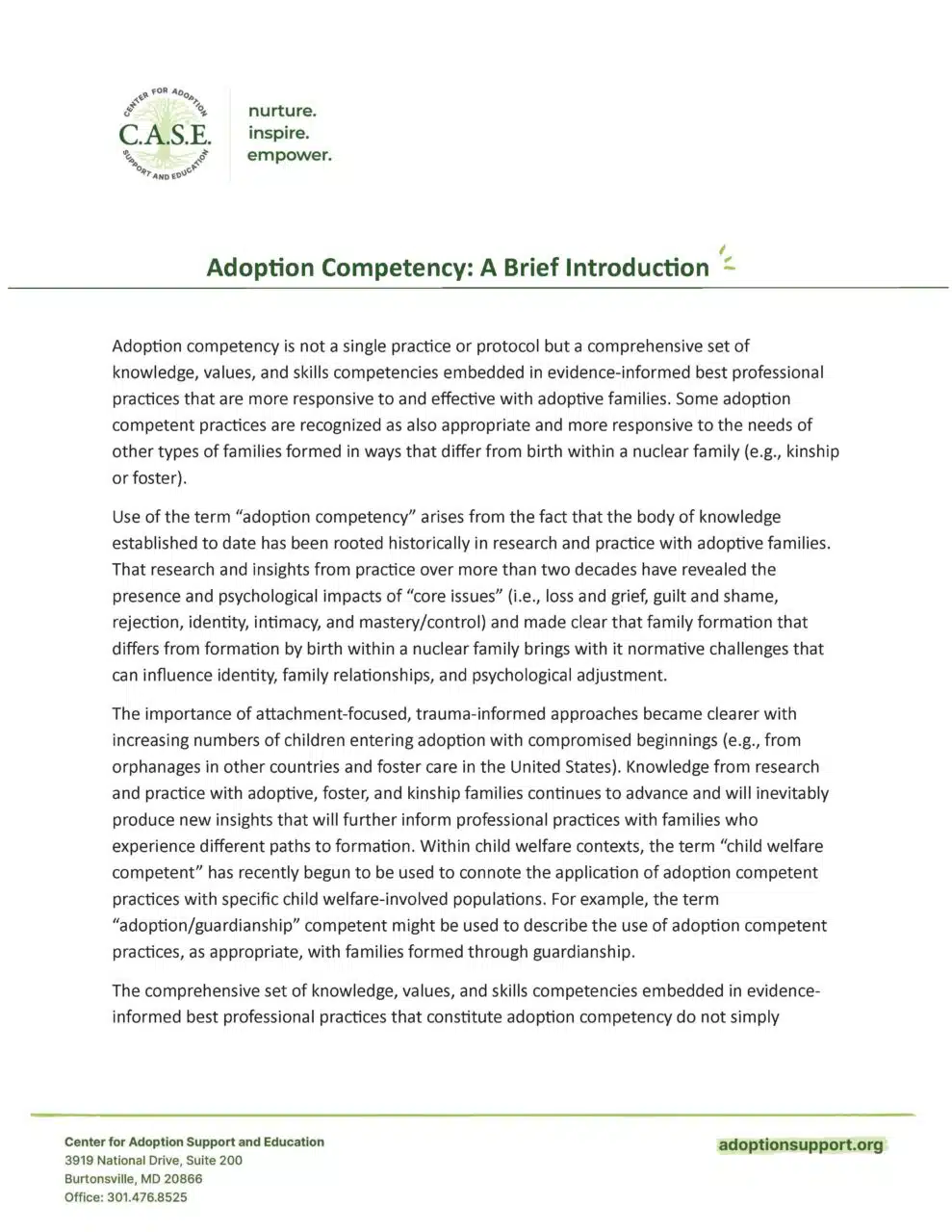
Adoption Competency: A Brief Introduction

Download

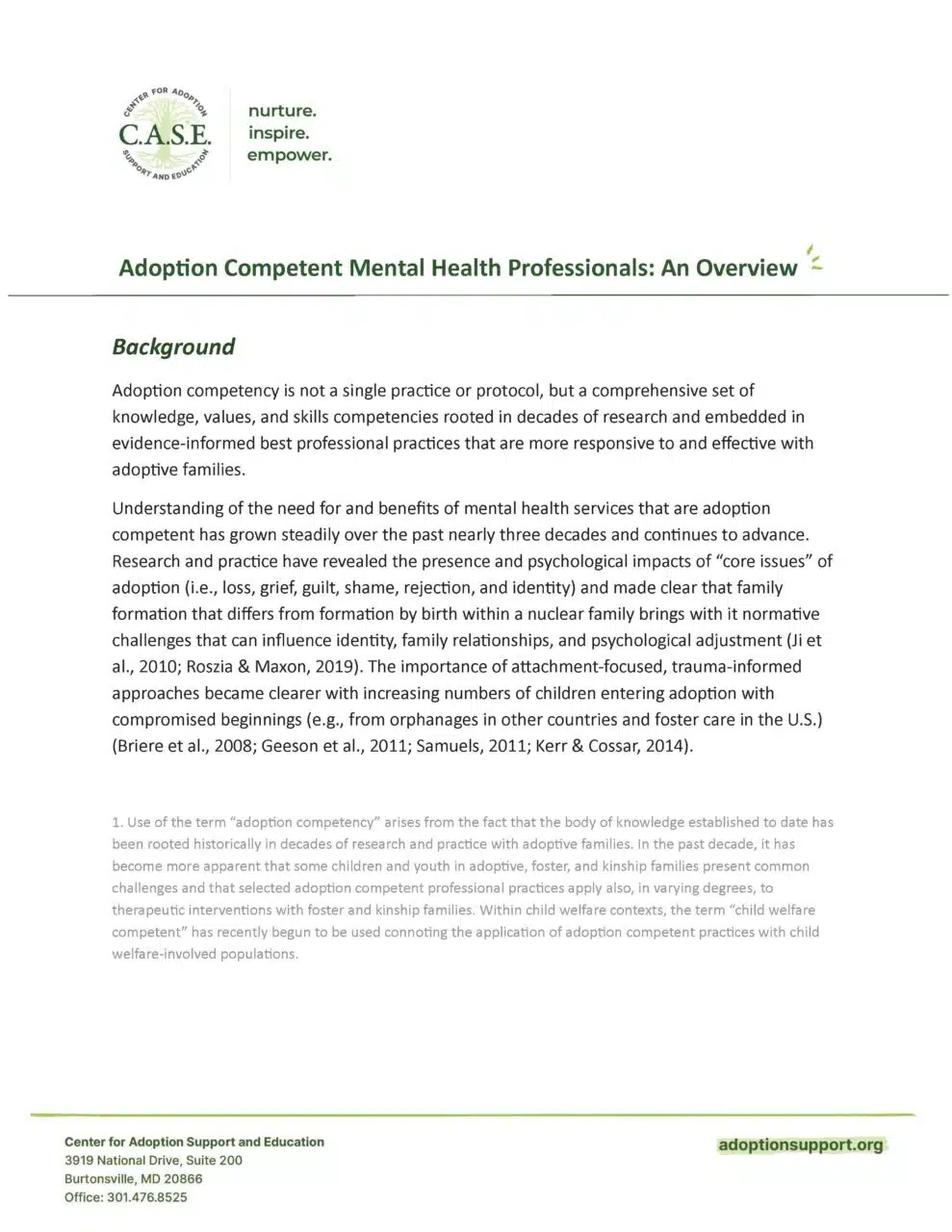
Adoption Competent Mental Health Professionals – An Overview

Download

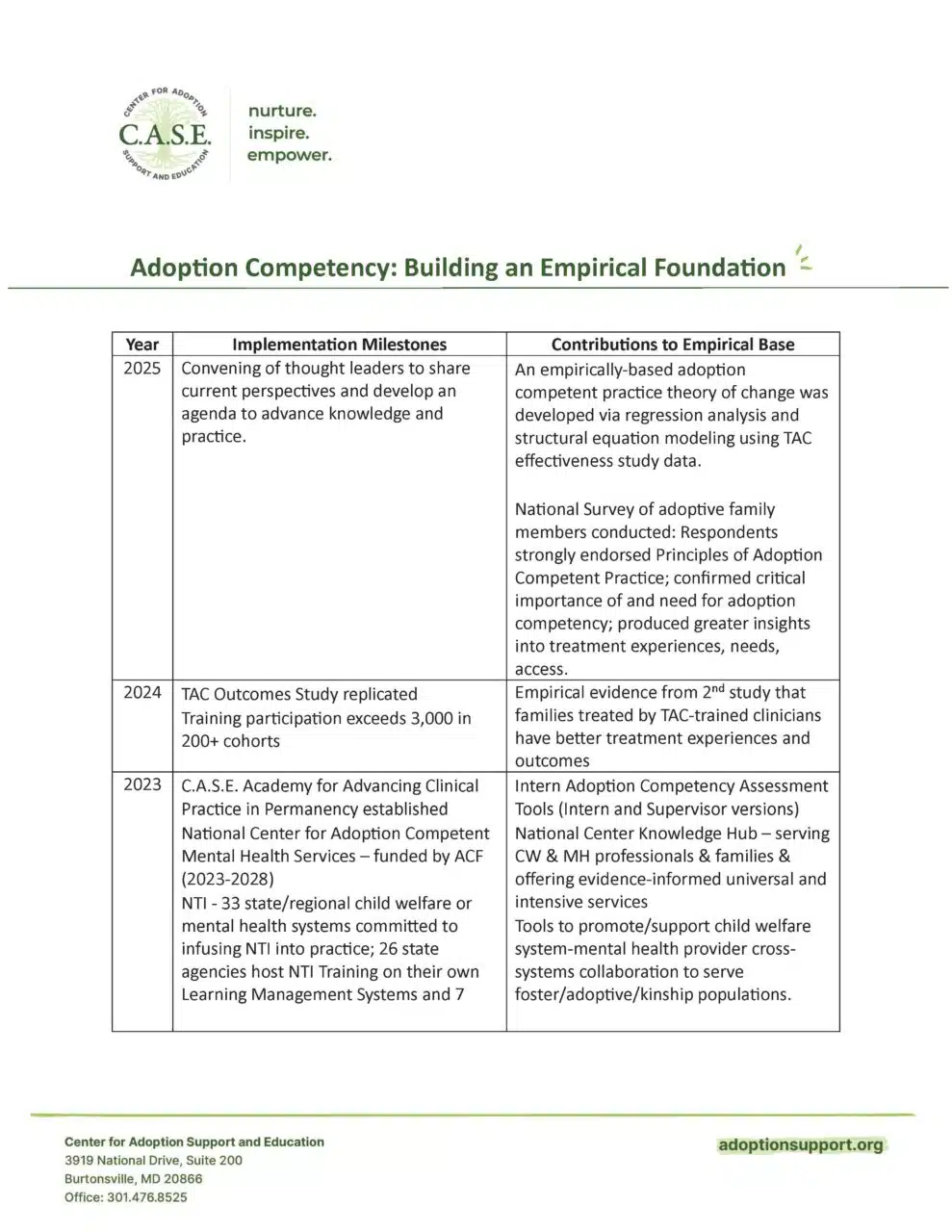
Adoption Competency: Building an Empirical Foundation

Download

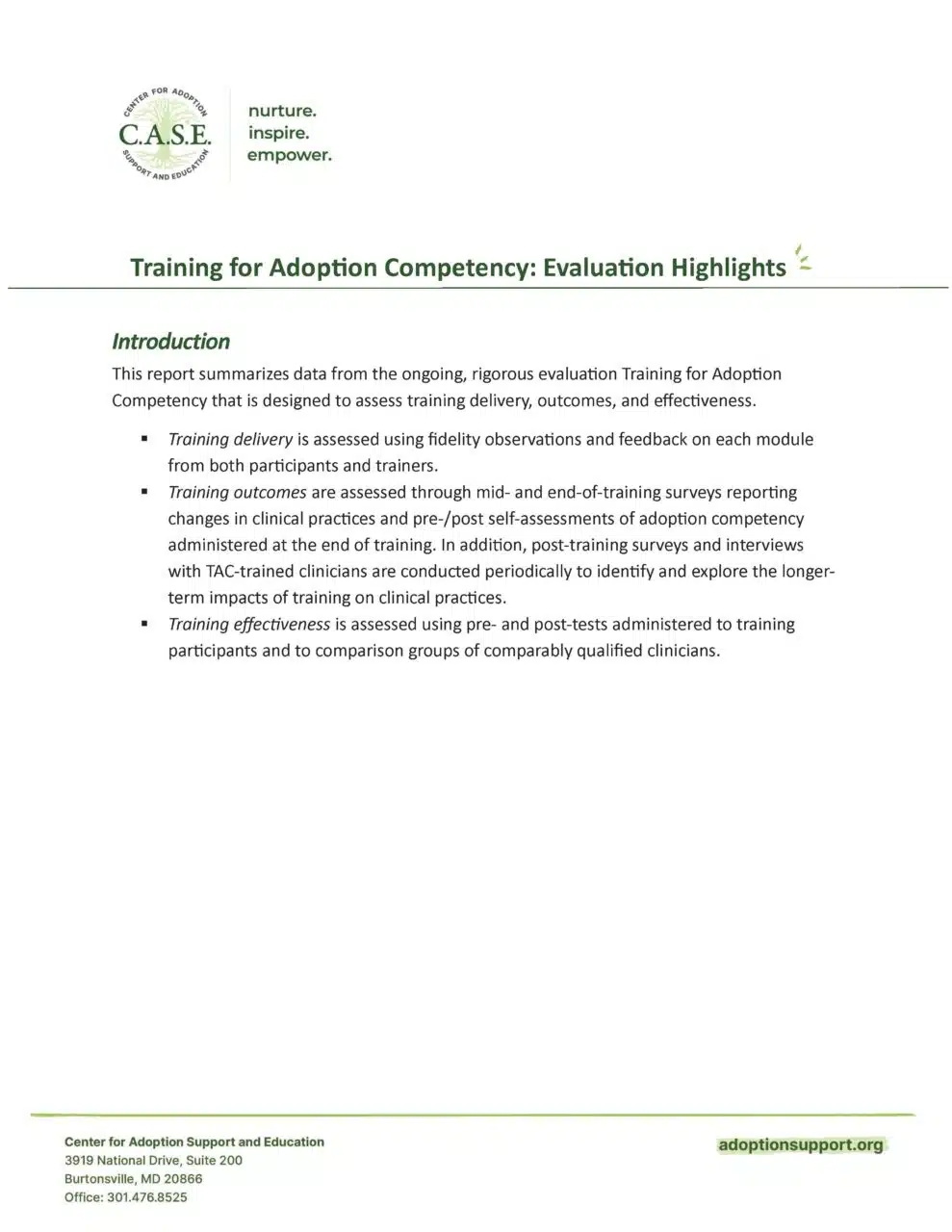
Training for Adoption Competency – Evaluation Highlights

Download

Press & Media

For press & media inquiries or with additional questions, please contact Hilary Forslund, C.A.S.E. Chief Marketing Officer:

forslund@adoptionsupport.org