Reflections from Debbie Riley’s Congressional Testimony: “Advancing Permanency in Child Welfare: Leveraging Federal Funding for Adoption Programs”
Reflections from Debbie Riley’s Congressional Testimony: “Advancing Permanency in Child Welfare: Leveraging Federal Funding for Adoption Programs”

Written by
Ashley Garcia Rivera, Policy Advisor
Published on:
Mar 31, 2026
Category
Adoption Competent Therapy
On March 26, 2026, Debbie Riley, LCMFT, CEO of the Center for Adoption Support and Education (C.A.S.E.), testified before the House Appropriations Subcommittee on Labor, Health and Human Services, Education, and Related Agencies during the hearing, Advancing Permanency in Child Welfare: Leveraging Federal Funding for Adoption Programs, which focused on how federal investments can strengthen permanency and outcomes for children and families.
As a national leader in adoption-competent mental health, as well as a licensed clinician and adoptive parent, Debbie grounded her remarks in decades of experience and a clear message: permanency requires more than placement, it requires access to adoption-competent mental health care before and after permanency.
The hearing, led by Chairman Robert Aderholt (R-AL) and Ranking Member Rosa DeLauro (D-CT), brought together leaders across the child welfare and advocacy fields to discuss how federal investments can better support children and families. Across the dais, there was clear interest in strengthening supports for families, particularly in ensuring that adoption and permanency are stable and sustainable.
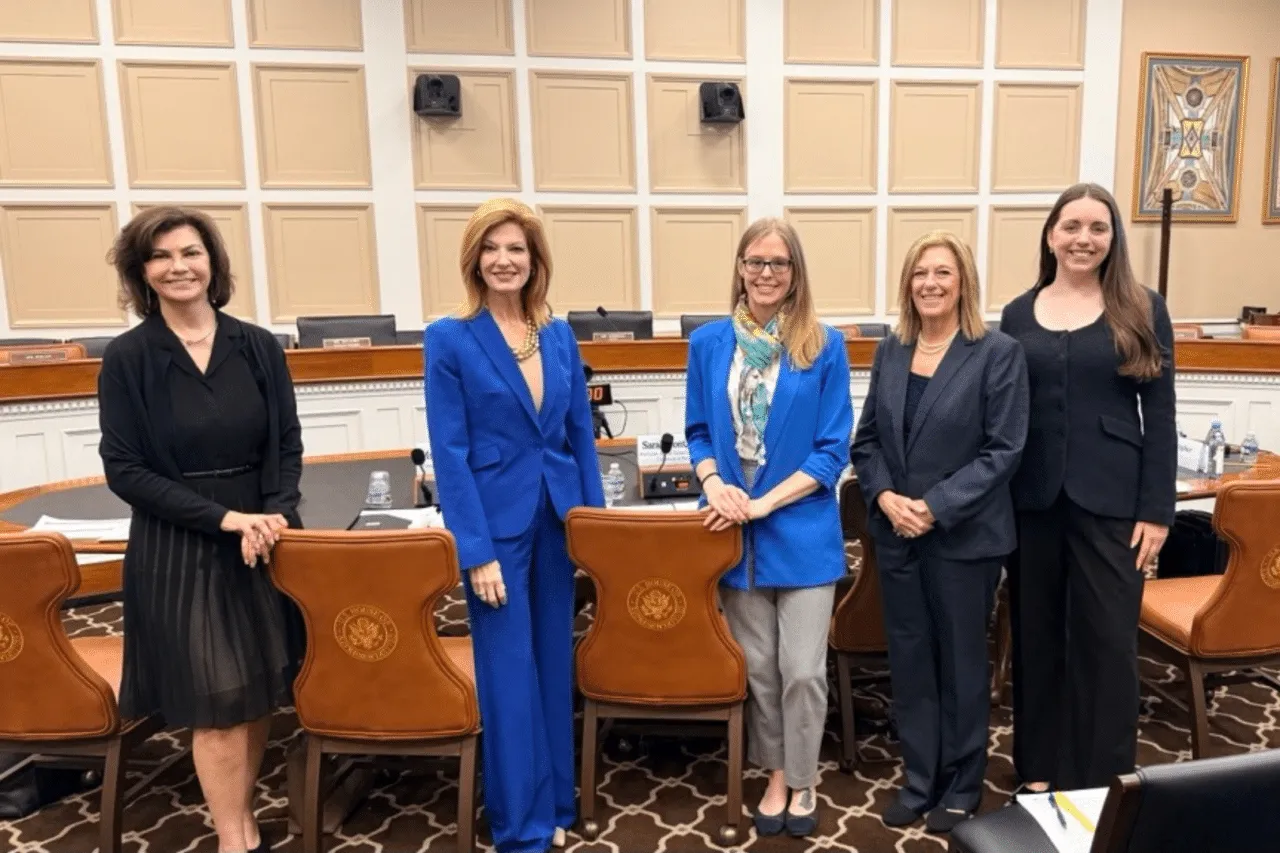
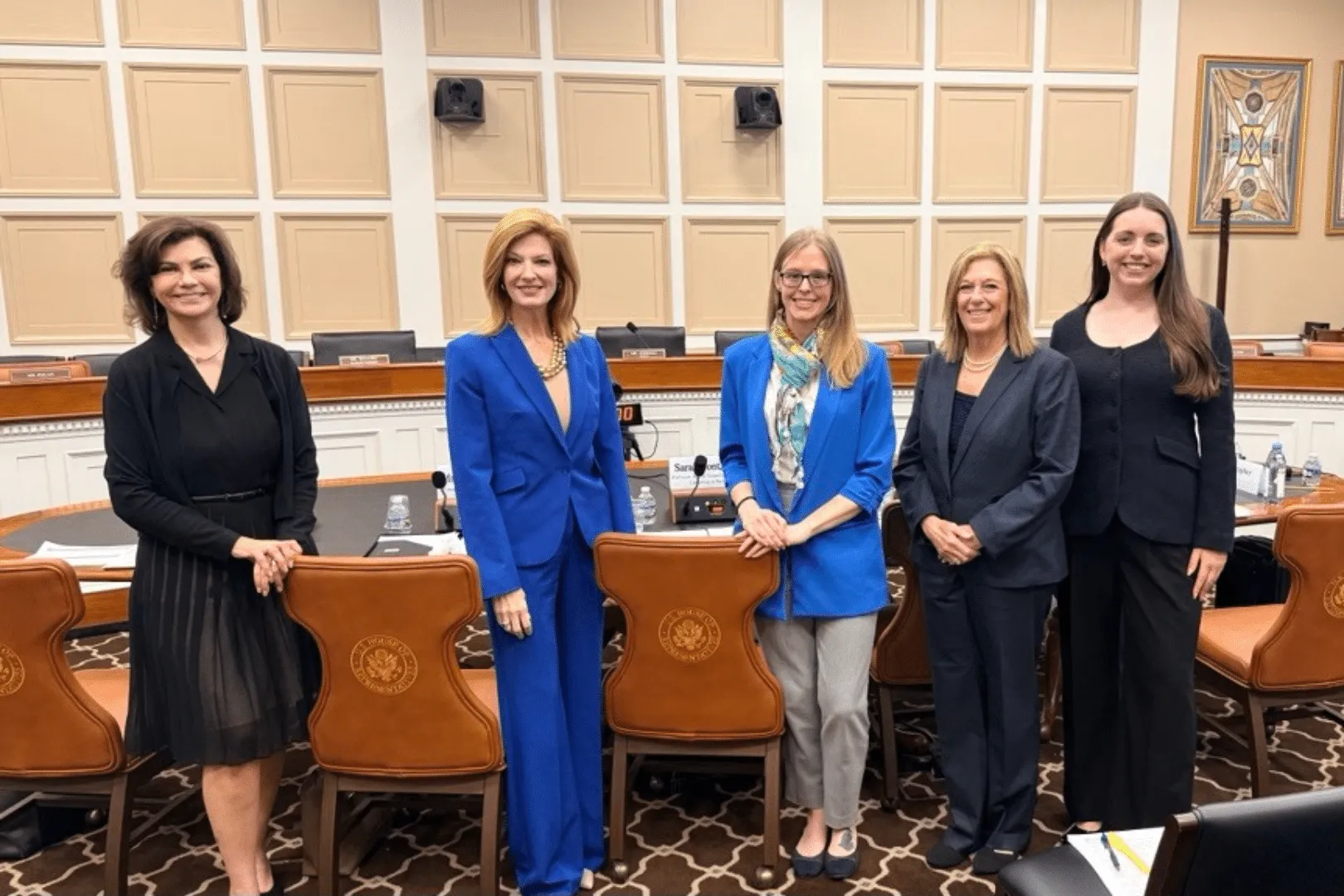
Throughout the hearing, there was a shared focus on advancing permanency for children and families across the panel, including witnesses; Kate McLean (Congressional Coalition on Adoption Institute), Sarah Font (Washington University in St. Louis), Aurene Martin (National Indian Child Welfare Association), and Lee Marshall (Kids to Love Foundation) with perspectives that consistently reinforced the need to better support families before and after permanency.
Image Left to Right: Aurene Martin, Lee Marshall, Sarah Font, Debbie Riley, Kate McLean
Why This Testimony Matters
Children and youth in foster care face higher rates of trauma, grief, and disrupted attachment. As Debbie noted, these issues persist after adoption and can affect long-term stability if not addressed. She also emphasized that families often must manage complex mental health needs without access to specialists trained in early trauma, separation, and loss.
Key Themes from the Hearing and Testimony:
Adoption-competent care is a standard of care
The testimony emphasized that adoption-competent mental health care is not a niche specialty, rather we need to ensure it is the “standard of care “.
The workforce gap is a structural issue
A central focus of the testimony was the gap between need and workforce capacity. Child welfare and mental health professionals often lack the training to address core issues like attachment and grief, contributing to delayed permanency, instability, and poor outcomes.
This challenge is compounded by broader workforce shortages in child welfare and mental health, high turnover, and limited access to providers, particularly for families relying on Medicaid or living in underserved areas. Families are accessing mental health services at rates three to five times higher than the general population, yet only 21% report receiving care from adoption-competent clinicians—highlighting a critical gap between need and access.
We have evidence-based solutions that work
As a result of over a quarter of a century of work building the evidence of adoption competency training and care, she highlighted that when providers receive the right training, practice improves and family outcomes improve, demonstrating that effective solutions already exist. C.A.S.E.’s Training for Adoption Competency (TAC) and the National Adoption Competency Mental Health Training Initiative (NTI) are evidence-informed programs that have trained thousands of professionals nationwide. These findings are supported by C.A.S.E.’s research and evaluation reports including the State of Practice report.
The testimony also highlighted the National Center for Adoption Competent Mental Health Services as a critical next step in strengthening coordination between child welfare and mental health systems by expanding access to adoption-competent providers earlier—before families reach crisis.
Delaying care leads to higher human and financial costs
Without access to appropriate services, families often face crisis-driven interventions, including unwarranted residential treatment placements and in some cases, relinquishment of custody by parents who saw no other avenue to access care. She underscored that these outcomes are not acceptable and preventable with earlier, targeted investment in mental health support.
A Clear Policy Direction
Throughout the hearing, one message remained consistent: federal investment must prioritize access to adoption-competent mental health care as a core component of permanency.
This includes:
- Continue the Expansion of adoption-competent workforce training
- Strengthening cross-system collaboration between child welfare and mental health
- Require NTI training for all mental health contractors in child welfare and mental health incentivize adoption-competent care via reimbursement models
- Create higher Medicaid reimbursement rates and expanded insurance for adoption-competent care providers
- Provide stable funding for post-permanency services that include adoption-competent mental health supports
Looking Ahead
Debbie’s testimony was both a reflection of decades of work and grounded in the voices of youth and families who have shared what they need, but too often cannot access. It reinforced that permanency is not achieved at the point of adoption but sustained through ongoing support.
As policymakers continue to examine how federal funding can better support youth and families achieve safe, stable and permanent families, there is a clear opportunity to ensure adoption competent care is not treated as an add-on, but as foundational to stability and well-being.
At C.A.S.E., we remain committed to advancing solutions that bridge child welfare and mental health systems and ensure families have access to the support they need.
We invite you to read Debbie Riley’s full testimony.
Because every child deserves not just a permanent family, but the support to thrive within it.