Mental Health Access Is the Missing Link
Mental Health Access Is the Missing Link
Published on:
Feb 02, 2026
Category
Mental Health
Finding Permanency Mental Health Access & Support
Love and belonging are often spoken about as natural outcomes of permanency, something that follows once a child has a stable home and legal security. But for many children and youth impacted by foster care and adoption, love and belonging are not automatic. They are built slowly, shaped by whether families have access to support when loss, trauma, and identity questions resurface over time.
Mental health access is one of the most urgent conversations happening in child welfare today. Across the country, families are encountering long waitlists, workforce shortages, and services that are not equipped to understand the complexities of foster care and adoption. Even families who are deeply committed and prepared often struggle to find providers who understand attachment, separation, and the lifelong impact of loss. When support is difficult to access, or not adoption-competent, families can feel isolated at the very moments they need guidance the most.
Loss & Grief Remerging During Developmental Stages
For children and youth who have experienced foster care, mental health needs do not end at permanency. In many cases, they become more visible. Grief may surface during adolescence as identity questions deepen. School transitions, peer relationships, and developmental milestones can bring new meaning to earlier experiences of separation. Without informed support, these moments can feel destabilizing for both youth and caregivers. This developmental pattern is also reflected in federal guidance from the Child Welfare Information Gateway, which notes that adoption-related grief and loss often re-emerge at different developmental stages, particularly during adolescence.
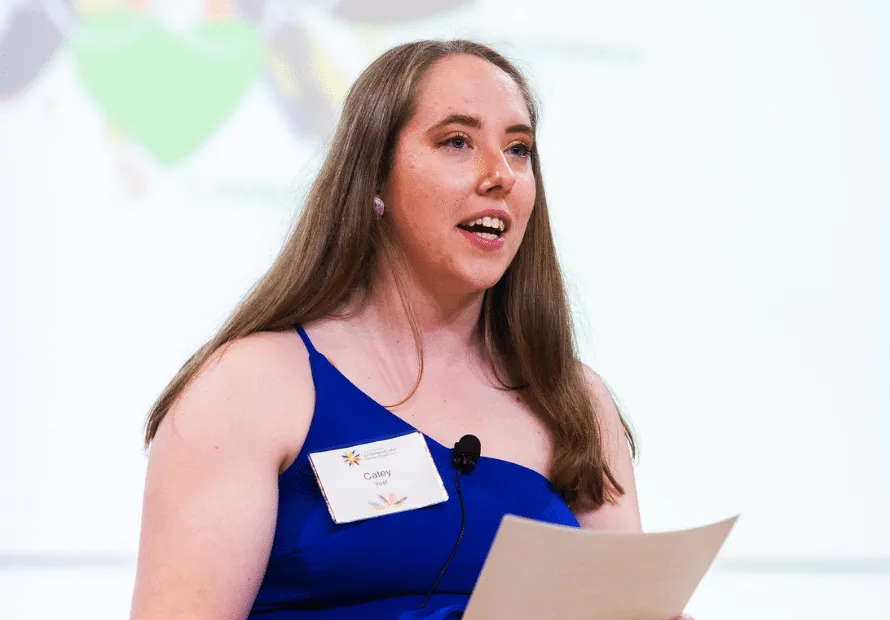
From my own lived experience, I know that healing is not linear. Loss does not follow a predictable timeline, and it rarely appears all at once. Yet systems are often structured to step back just as families are navigating the most complex emotional terrain. When mental health care is unavailable, inaccessible, or misaligned with adoption and foster care realities, families are left to manage these challenges alone, even when they are doing everything they can to provide stability and love.
This gap is not accidental. From a policy perspective, mental health access has largely been framed as a question of availability rather than competency. While there is increasing attention to expanding the behavioral health workforce, adoption and foster care competency are still often treated as specialized or optional. As a result, families may technically have access to services, but not to care that understands how trauma, attachment, identity, and loss intersect across a child’s life.

Access without competency is not enough.
Mental health access also cannot be strengthened in isolation. Children and families impacted by foster care and adoption move across multiple systems, including child welfare, behavioral health, education, and community-based services, often repeating their stories without continuity or coordination of support. When systems operate in silos, families are left to bridge the gaps themselves, navigating inconsistent expectations, fragmented services, and support that falls away at critical moments.
Effective policy must recognize that healing and belonging are shared responsibilities. Schools, pediatric providers, mental health professionals, and child welfare agencies all shape a child’s daily experience of safety and connection. Without intentional cross-system collaboration and shared standards for adoption-competent care, even well-intentioned services can miss the mark. Strengthening mental health access means ensuring that systems work together so families experience support as continuous, informed, and responsive rather than disconnected.
The Impact of Adoption-Competent Mental Health Care Across Systems
At C.A.S.E., we see the impact of adoption-competent mental health care every day. When providers understand the full context, therapy becomes a space where loss is acknowledged rather than minimized. Parents feel supported rather than blamed or dismissed. Youth feel seen rather than labeled. These shifts are not incidental; they are the result of intentional training and systems that recognize the unique needs of adoptive, foster, kinship, and guardianship families.
This is especially important for transracial families, where mental health care must also address cultural identity, racial experience, and the added layers of complexity youth may carry. Without culturally responsive adoption-competent care, children are often asked to separate parts of themselves in order to receive support, a tradeoff that undermines healing and belonging.
As federal and state leaders consider investments in behavioral health workforce development, school-based mental health initiatives, and system integration, there is a chance to strengthen how mental health care supports children and families long after permanency is achieved. Doing so requires more than increasing the number of providers. It requires intentional investment in training, cross-system coordination, and standards that prepare professionals to understand adoption, trauma, attachment, and identity across the lifespan.
Mental health access is not separate from permanency, and it cannot be addressed by any one system alone. It is a stabilizing force that helps families navigate challenges, strengthens relationships, and supports long-term well-being. When access to competent care is limited or fragmented, permanency becomes more fragile, not because families lack love, but because they lack support.
Love and belonging are sustained through understanding, connection, and the assurance that families do not have to navigate loss alone. As child welfare systems continue to evolve, ensuring access to adoption-competent mental health care, supported by strong cross-system collaboration, is one of the most meaningful ways policy can support children and families for the long haul.
Permanency may open the door, but healing requires ongoing, coordinated support. Mental health access delivered across systems is the missing link that allows love and belonging to endure.